Integration of Global ESG Disclosure Standards - Implications from an Investor's Perspective
·
investment
·
market
Integration of Global ESG Disclosure Standards - Implications from an Investor's Perspective
Discussions on the interoperability of ISSB-GRI-ESRS are gaining momentum. We have analyzed the impact of standard integration on ESG investment decision-making.
Silica Gel Alternative 'Eco-Friendly Paper Dehumidifier' Supply
Dehum, known as a specialized company for eco-friendly living products and fashion raw materials, has recently launched the 'Eco-Friendly Paper Dehumidifier', accelerating the activities of a promising small business that protects and perpetuates the environment through ESG (Environmental, Social and Corporate Governance).
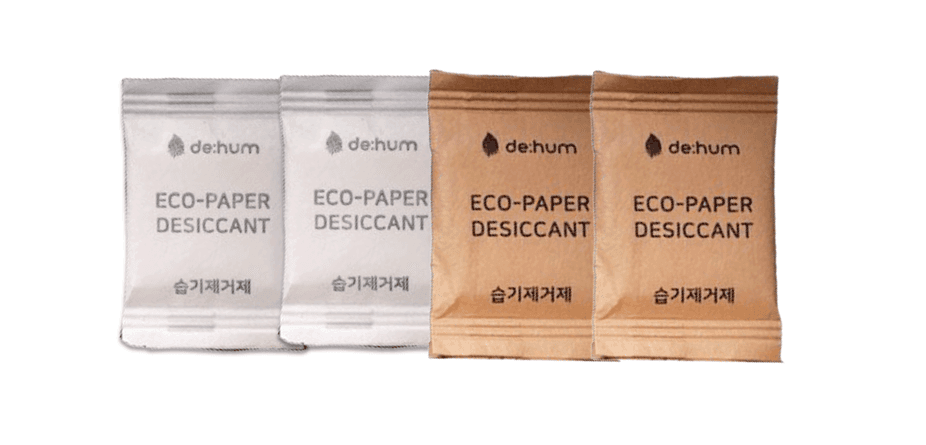
Photo: Types of eco-friendly (paper) dehumidifiers supplied by Dehum.
After developing the fashion new materials 'Shine Biodegradable Tape' and 'Shine Biodegradable Fabric' using existing biodegradable fibers, Dehum has launched a natural paper dehumidifier under the 'Dehum' brand as an alternative to harmful silica gel dehumidifiers and is supplying it to mid-sized fashion companies.
The 'Dehum' eco-friendly dehumidifier is made from plant fibers, is non-toxic, harmless to humans, and does not cause environmental pollution.
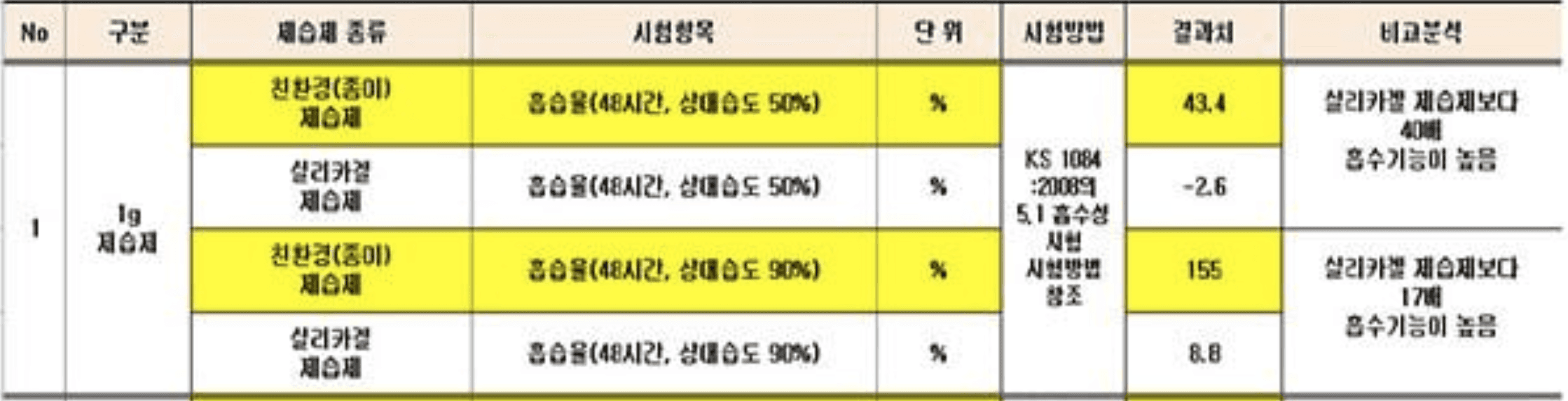
This product is environmentally friendly, decomposing 100%, and the product packaging is also made from paper bags of wood pulp fiber, resulting in 100% biodegradability. Particularly, the 'Yui' dehumidifier changes from a hard to a soft state upon moisture absorption, allowing users to check the moisture absorption status, and has the advantage that when the dehumidifier packaging is damaged, it does not spill out like silica gel.

In the case of existing silica gel dehumidifiers, the transparent glass-like material makes it difficult to confirm the dehumidification state, so to easily identify this, about 3~5% of blue silica gel is mixed during packaging, and when it starts to hold about 25% moisture, the color changes.
Silica gel is mostly dyed with cobalt chloride or methyl violet, with cobalt chloride changing from blue to pink and methyl violet changing from orange to green, allowing users to check the moisture absorption state.
The production and distribution of products using these materials have started to be banned in Europe (revision of EU Directive 98/99/EC), and the U.S. FDA recommends not using silica gel that does not decompose in soil for food or pharmaceuticals.
In particular, when disposed of, it causes very serious pollution to soil environments due to strong acidity, and most importantly, once the absorbed moisture reaches its limit, it has the problem of exudation, where it releases moisture again.
Additionally, excessive use of calcium chloride as a raw material for dehumidifiers also significantly impacts plants and animals. In 2010, there was a case in South Korea where trees around orchards near roads died after the Korean Expressway Corporation sprinkled dehumidifiers, leading to a judgment that they should compensate. Research conducted by the National Institute of Industrial Science from 2005 for six years also proved that calcium chloride causes damage to trees.
Zeolite dehumidifiers are used as natural dehumidifiers but are sold at more than six times the cost of silica gel dehumidifiers, which is a disadvantage.
Yui Shining has produced and is supplying this paper dehumidifier in two types: 1 gram (32mm x 46mm) and 3 grams (60mm x 60mm).
The CEO of Dehum stated, "Paper dehumidifiers have been used in sanitation for 7-8 years, leading the way in the use of eco-friendly materials, and consultations with other mid-sized fashion companies are actively ongoing. Yui Shining is focused on developing products using eco-friendly materials that are utilized in real life."
Title 1 | Title 2 | Title 3 |
|---|---|---|
Cell 1-1 | Cell 1-2 | Cell 1-3 |
Cell 2-1 | Cell 2-2 | Cell 2-3 |
PlasticWaste
·
CircularEconomy
What's inside your product packaging
PPWR2026
·
GreenPackaging
Greenwashing is out. Proof is everything.